Energy Storage Systems vs. All-in-One Inverter Systems: How to Choose
As more homeowners and businesses look for reliable, efficient, and independent power solutions, two technologies are becoming increasingly popular: Energy Storage Systems (ESS) and All-in-One Inverter Systems. Both store energy for later use, but they differ in design, flexibility, and application. To help you choose the right solution, we've broken down what each system includes, how they work, and where each one performs best.
1. Energy Storage Systems (ESS): A Flexible and Customizable Approach
What is an ESS?
An Energy Storage System captures electrical energy—often from solar power—and stores it for later consumption. Although the idea is simple, ESS setups can vary widely depending on the battery type, system size, and the inverter selected.
-
Battery: Stores energy in DC form and serves as the heart of the system. LiFePO4 solar battery often used for residential energy solution.
-
Battery Management System (BMS): Protects the battery by regulating charge, discharge and temperature.
-
Inverter/Charger: Converts DC to usable AC electricity and manages battery charging.
What ESS Systems Are Used For
-
Capturing excess solar generation for nighttime use
-
Providing backup power during grid outages
-
Supporting commercial operations with peak-shaving or demand management
|
|
|
 Moveable LiFePO4 Battery Module 8.04kWh/16.08kWh
|


Benefits of ESS
-
Highly configurable—compatible with many inverter brands and sizes
-
Easy to expand as energy needs grow
-
Optimized performance with dedicated energy-management components
2. All-in-One(AIO) Inverter Systems: Streamlined Power and Storage in a Single Unit
-
Inverter: Converts DC power from solar or batteries into AC power for your home or business.
-
Charge Controller: Ensures batteries are charged safely and efficiently.
-
Integrated Battery Storage: A built-in battery pack designed to work seamlessly with the inverter.
Purpose & Advantages
AIO systems are designed for simplicity. They provide a plug-and-play solution that simplifies installation, reduces wiring complexity, and minimizes space requirements.
Advantages include:
-
Fast and straightforward installation
-
Compact footprint with fewer external components
-
Unified monitoring and control through built-in software
 Stackable Home Solar Energy Storage System
|
 Stackable All-in-One Energy Storage System 1200W
|


3. Key Differences Between ESS and All-in-One Systems
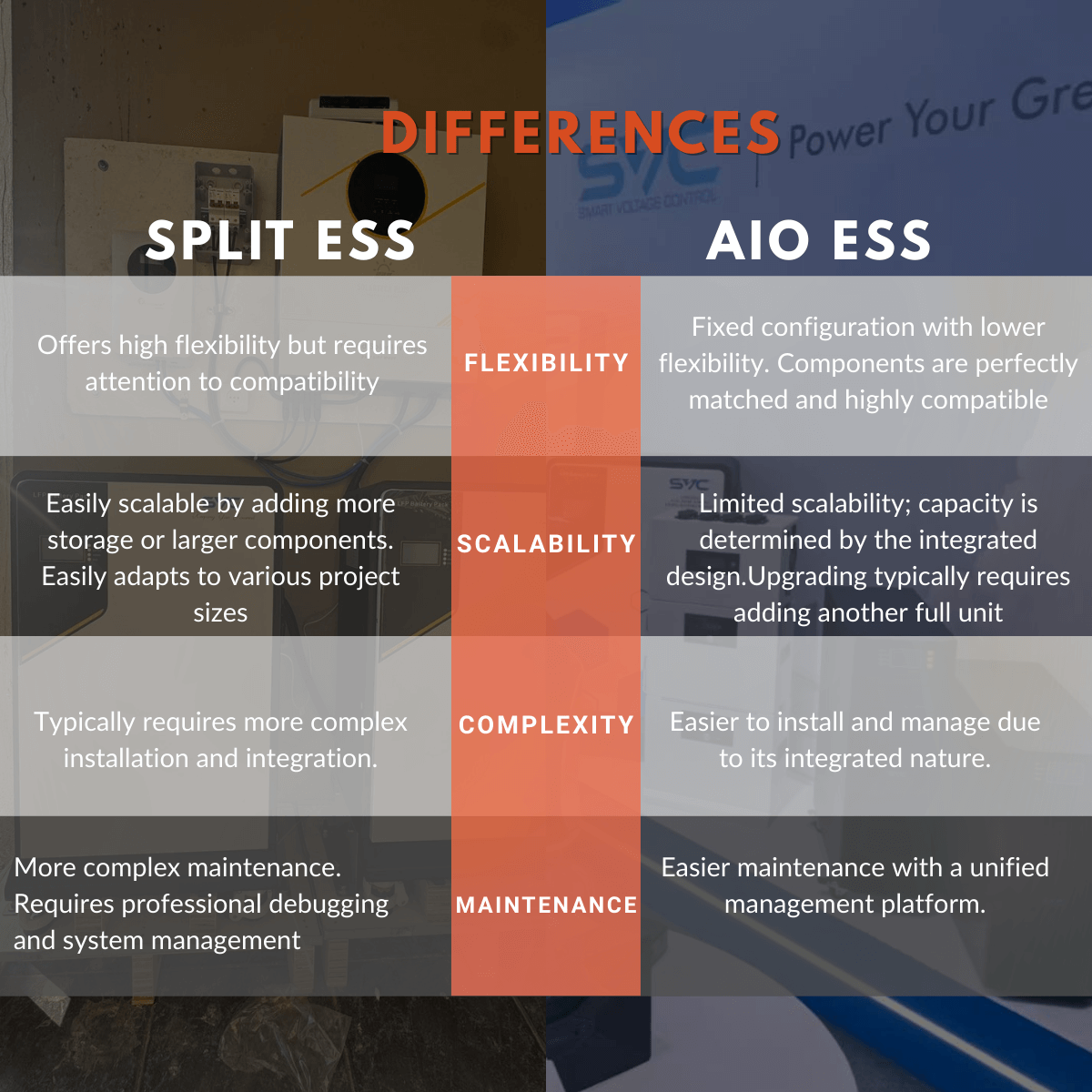
Flexibility
-
ESS: Offers broad compatibility with different inverter types and power configurations.
-
All-in-One: Limited flexibility because the system is integrated into one unit.
Scalability
-
ESS: Easy to scale by adding additional battery modules or upgrading components.
-
All-in-One: Expansion is often restricted by the system's built-in capacity.
Complexity
-
ESS: Typically requires more installation planning and component integration.
-
All-in-One: Much simpler to install—ideal for quick deployment.
Cost
-
ESS: More cost-effective for large, customized setups.
-
All-in-One: Higher upfront cost but reduced installation and labor expenses.
4. How to Choose?
Choose ESS if you need:
-
Maximum design flexibility
-
Ability to expand storage over time
-
A solution for larger residential or commercial projects
Choose an All-in-One System if you want:
-
A compact, simple, turnkey solution
-
Minimal installation time
-
A suitable system for small to medium-size homes or light commercial use
Both approaches offer powerful energy-management capabilities. The best choice depends on your site conditions, energy goals, and long-term plans. Our engineering team is always available to help design a system tailored to your needs—no one-size-fits-all packages, just customized solutions that work.
Why Prismatic Cells Are Shaping the Future of Home Energy Storage
A Simple Guidance on Home Energy Storage Systems
If you are looking for the products for your business please
contact us

+86 75782782286


Headquaters: Block7, No.115, ZhangChayi Road, Foshan, Guangdong, China