
Guidance of All-in-One Energy Storage System 2026
Introduction: Why Choose an All-in-One Solar Energy Storage System?
Pre-Purchase Essentials: Define Your Needs
Before customers start looking for the right system, they need to ask themselves three key questions:
- What is the primary goal?
- Cost Savings: Maximize self-consumption of solar energy to offset grid electricity use, ideal for areas with high electricity costs or significant peak/off-peak price differentials.
- Backup Power: Ensure an uninterrupted power supply for critical appliances like refrigerators, medical devices, and internet routers during outages, suitable for regions with an unstable grid.
- Investment & Revenue: Participate in Virtual Power Plants (VPPs) or leverage time-of-use pricing to generate revenue, treating the storage system as an operational asset.
-
What is their energy profile?
- Review your average daily and monthly electricity consumption (available on utility bills).
- Identify critical load requirements: What appliances must remain on during a blackout? What is their combined starting and running power?
- Assess installation site conditions: Available roof/ground space and its orientation directly impact solar generation potential.
-
What is the budget?
- Establish a realistic budget covering equipment, installation, and potential future upgrades. By 2026, economies of scale have significantly reduced unit costs, with typical payback periods ranging from 5 to 8 years.
Key Technology Breakdown for 2026
Understanding core technologies is essential for an informed decision:
-
Battery Technology: The Cornerstone of Safety & Longevity
-
Lithium Iron Phosphate (LFP): Remains the mainstream choice, serving as the cornerstone for home storage due to its exceptional safety and cycle life exceeding 6,000 cycles (for 2026 benchmark products).
-
Sodium-Ion Batteries: An emerging alternative! They offer lower cost, better performance in cold climates, and use more abundant materials. By 2026, their cycle life has surpassed 4,000 cycles, making them a compelling option for budget-conscious buyers.
-
Solid-State Batteries: The new frontier. Promising even higher energy density and ultimate safety, pilot products are now available from industry pioneers, pointing the way to the future.
-
-
Inverter & Smart Management: The System's Brain
-
Advanced MPPT Algorithms: 2026 algorithms more precisely track the maximum power point of solar arrays under complex weather conditions, boosting daily energy yield by 3%-5%.
-
Hybrid Inverter Technology: Seamlessly integrates solar, battery, and grid power, enabling millisecond-level switching to ensure stable off-grid operation for critical loads.
-
AI Forecasting & Scheduling: Uses weather forecasts and learns consumption patterns to intelligently predict energy flow and automatically optimize charging/discharging strategies, maximizing the value of every kilowatt-hour.
-
Guide to Key Purchasing Parameters
When reviewing product specifications, focus on these critical metrics:
-
Storage Capacity (kWh): Determines "how much" energy can be stored. It should typically cover 4-6 hours of your evening electricity consumption (when solar isn't producing).
-
Continuous Power Rating (kW): Determines "how much power" can be delivered at once. Must exceed the total starting power of all critical loads you wish to run simultaneously during an outage.
-
Round-Trip Efficiency: The total energy loss during the charge/discharge cycle. Top systems in 2026 exceed 92% efficiency. A higher percentage means more savings.
-
Scalability: Does the system support adding extra battery modules later? Are there enough solar input channels? Plan for future needs.
-
Safety Certifications: Ensure the system has mandatory local certifications (e.g., UL, CE, CQC) and check for reports on passing rigorous tests like nail penetration and thermal runaway propagation.
Mainstream All-in-One ESS in 2026
-
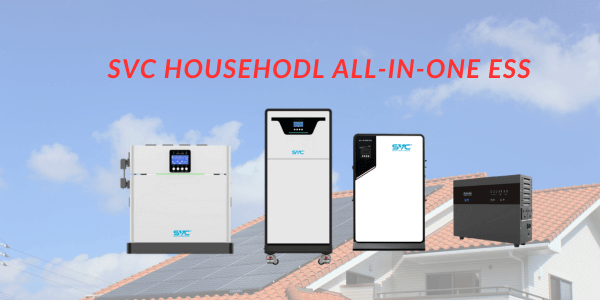
Compact All-in-One Units (5-15 kWh): Designed for average homes. Feature sleek designs for wall or floor mounting, integrate all components, and offer true plug-and-play operation.
-
Modular Stackable Systems (15+ kWh): Allow flexible combination of battery and inverter modules. Capacity and power can be expanded like building blocks, suitable for large homes, villas, or small commercial applications.
-
Ecosystem-Integrated Systems: Deeply integrated into smart home ecosystems (e.g., Huawei, Tesla). Can interact with EVs, heat pumps, and smart appliances for whole-home automated energy optimization.
FAQ
-
Q: Is a larger capacity always better?
-
A: Not necessarily. Oversizing leads to wasted investment and longer payback periods. Size your system based on actual needs, with a 20%-30% buffer being sufficient.
-
-
Q: How can I assess claimed cycle life?
-
A: Always check the cycle life specification at a defined Depth of Discharge (e.g., 80%). Pay close attention to warranty terms guaranteeing a minimum "end-of-warranty capacity retention rate" (e.g., 70%).
-
-
Purchasing Pitfalls to Avoid:
-
The "Too Good to Be True" Price: Products priced significantly below market averages may cut corners on cell quality, BMS, or cooling systems, posing safety risks.
-
Exaggerated Specifications: Be wary of inflated power and capacity ratings. Request authoritative third-party test reports.
-
Unprofessional Installation: Solar storage is a specialized field. Always use installers certified by the manufacturer. Proper installation is crucial for safety and performance.
-
Overlooking After-Sales Service: Clarify warranty length (typically 10+ years for batteries), coverage, and response times. A strong local service network is vital.
-
Navigating the Landscape of Energy Storage Systems: A Comprehensive Guide
Everything about All in One ESS - Home Energy Storage Solution

If you are looking for the products for your business please
contact us

+86 75782782286


Headquaters: Block7, No.115, ZhangChayi Road, Foshan, Guangdong, China