
Navigating the Landscape of Energy Storage Systems: A Comprehensive Guide
Unpacking the Complexity of Modern ESS
At the heart of any BESS lies a sophisticated interplay of technology, design, and engineering. Lithium-ion batteries, prized for their high energy density and longevity, serve as the cornerstone for most contemporary systems. However, their dominance comes with challenges, including stringent safety requirements, the need for advanced thermal management, and the imperative for rigorous quality control to ensure advertised performance translates into real-world reliability.
Equally critical is the Power Conversion System (PCS), or inverter, which acts as the system's engine. It converts stored direct current (DC) from batteries into usable alternating current (AC) for homes and businesses, and vice-versa for recharging. Modern PCS units are engineering marvels, capable of "grid-forming" (creating a stable, independent power source) or "grid-following" (synchronizing with the utility grid), all within increasingly compact form factors. The complexity of integrating these components—while ensuring safety, longevity, and cost-effectiveness—underscores the need for continuous innovation in battery chemistry, power electronics, and system intelligence.
Types of ESS Solutions: AC-Coupled vs. Distributed Systems
ESS solutions are broadly categorized into two main architectural approaches, each with distinct advantages and ideal use cases.
1. AC-Coupled Battery Systems (AC Battery Systems)
These are integrated, often modular solutions where the battery and inverter are combined into a single, pre-engineered unit. Storage capacity and AC power output are inherently linked. Designed primarily for residential retrofit or straightforward new installations, they offer plug-and-play simplicity and ease of integration with existing solar photovoltaic (PV) systems.
Key Advantages:
-
Simplicity & Ease of Installation: A streamlined solution requiring less custom design work.
-
User-Friendly: Often managed via intuitive smartphone apps.
-
Seamless Retrofit: Ideal for adding storage to homes with existing solar arrays.
Considerations:
-
Limited Scalability: Expanding storage capacity typically requires adding another complete (inverter+battery) unit, which can be less cost-effective.
-
Less Customization: Offers fewer options for tailoring system specifications to unique needs.


2. Distributed or DC-Coupled Systems
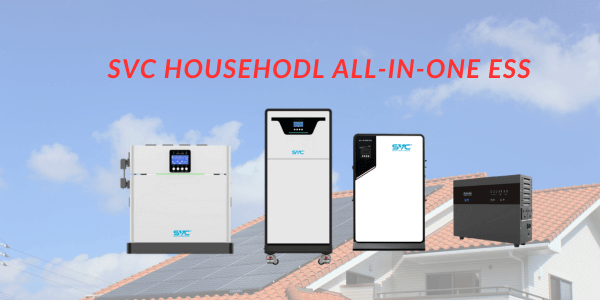
This architecture decouples the inverter from the battery bank, allowing for independent scaling of power output (inverter size) and energy storage (battery capacity). These systems are highly flexible, supporting a wide range of battery voltages and chemistries, and are often built around "All-in-One" (AIO) hybrid inverters that can manage both solar generation and battery storage directly.
Key Advantages:
-
High Scalability & Flexibility: Storage capacity can be expanded significantly without necessarily replacing the inverter.
-
Optimized for Off-Grid & Resilience: Often feature robust grid-forming capabilities and are well-suited for long-duration backup power.
-
Cost-Efficiency at Scale: Can be more economical for large storage needs or complex energy management goals.
Considerations:
-
Increased Design Complexity: Requires more detailed system design and component compatibility verification.
-
Specialized Installation: May need installers with specific expertise compared to standardized AC systems.


The Four Pillars of a Functional ESS
Regardless of architecture, every modern BESS relies on four fundamental components:
-
Power Conversion System (PCS): The intelligent inverter that manages bidirectional energy flow (DC⇄AC), integrates with solar inputs, and defines the system's ability to operate with or independently from the grid.
-
Battery Bank: The core storage medium, increasingly dominated by lithium-ion variants for their performance and lifespan. A closed-loop communication link between the battery management system (BMS) and the PCS is vital for safety, performance monitoring, and longevity.
-
Microgrid Interconnection Device (MID): The critical safety and integration gateway. It enables seamless, safe transitions between grid-connected and islanded (off-grid) modes, protecting utility workers and ensuring system stability.
-
Advanced Logic Controls: The system's "brain." This software-driven intelligence optimizes energy dispatch for economic savings (peak shaving, load shifting, arbitrage), manages backup power priorities, and ensures all components operate safely and efficiently within their parameters.
Conclusion: ESS as the Keystone of a Sustainable Grid
The exploration of Battery Energy Storage Systems reveals a technology that is maturing from a novel accessory to a central pillar of modern energy infrastructure. The choice between an AC-Coupled system for its simplicity and a Distributed system for its flexibility hinges on specific project goals, scale, and the desired level of energy independence.
As innovation continues—driving down costs, improving battery longevity, and enhancing smart grid integration—ESS will play an ever more pivotal role. They are not merely backup power solutions but active tools for grid stabilization, renewable energy maximization, and achieving true energy resilience. The continued advancement and adoption of ESS are fundamental to unlocking a reliable, efficient, and sustainable energy future for all.
Understanding All-in-One Inverter Systems
Guidance of All-in-One Energy Storage System 2026

If you are looking for the products for your business please
contact us

+86 75782782286


Headquaters: Block7, No.115, ZhangChayi Road, Foshan, Guangdong, China