Inverter Buying Guidance 2026
What is an Inverter?
An inverter is a power electronic device that converts direct current(DC) into alternating current(AC). Most household appliances and electrical loads operate on AC power. Since solar panels generate DC power, the inverter serves as the crucial link, transforming the DC power produced by solar panels or stored in batteries into usable AC power for your home.
What are the Common Types of Inverters?
1. Grid-Tied (Grid-Interactive) Inverters
This is typically the simplest and most cost-effective option for homes already connected to the utility grid. A basic system requires only solar panels and the inverter. The grid-tied inverter uses solar energy to power home loads and exports any surplus to the grid. For safety reasons, they are required to shut down during a grid outage to prevent "islanding" (feeding power back into de-energized utility lines). Consequently, a standard grid-tied system will not provide power during a blackout, even if the sun is shining.
2. Off-Grid (Standalone) Inverters
Designed for locations without any utility connection, off-grid inverters are essential for complete energy independence. They typically require a connection to a battery bank to operate. Unlike grid-tied models, they usually do not accept DC input directly from solar panels; instead, a separate charge controller manages the energy flow from the panels to the batteries. The off-grid inverter then draws power from the batteries to supply AC loads. These systems operate independently of the grid's status.
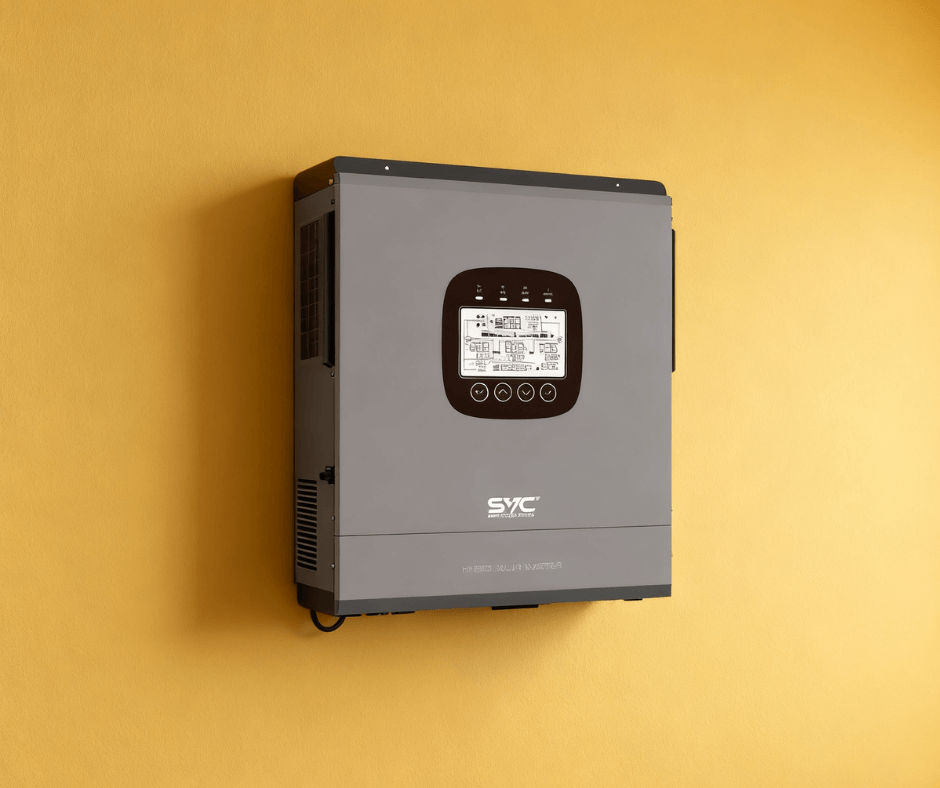
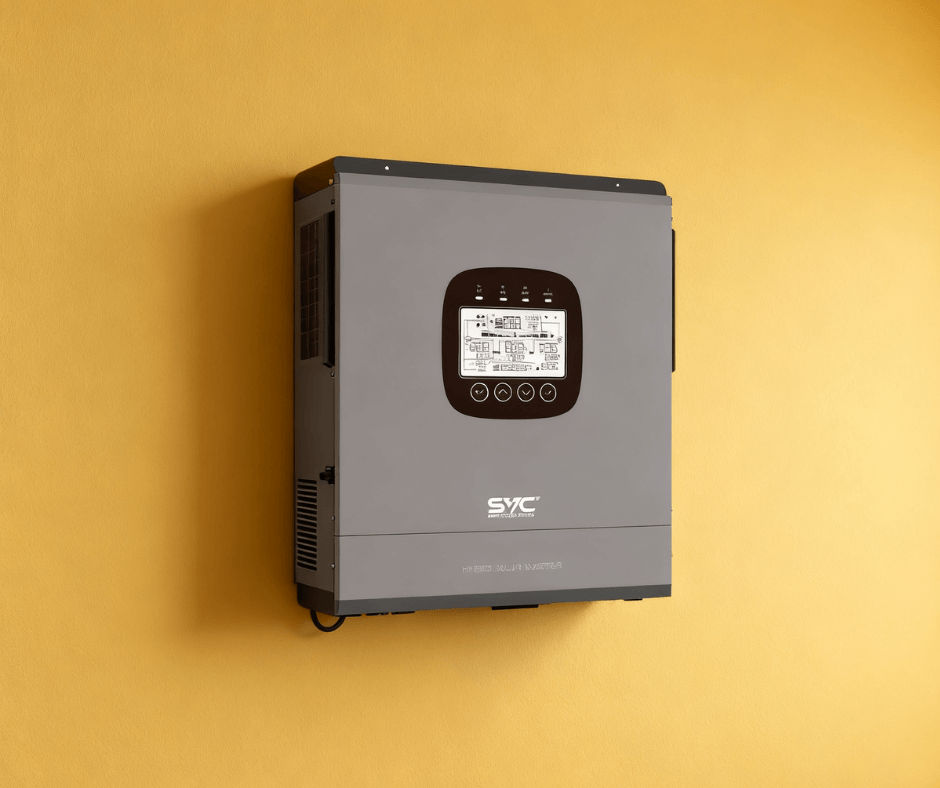
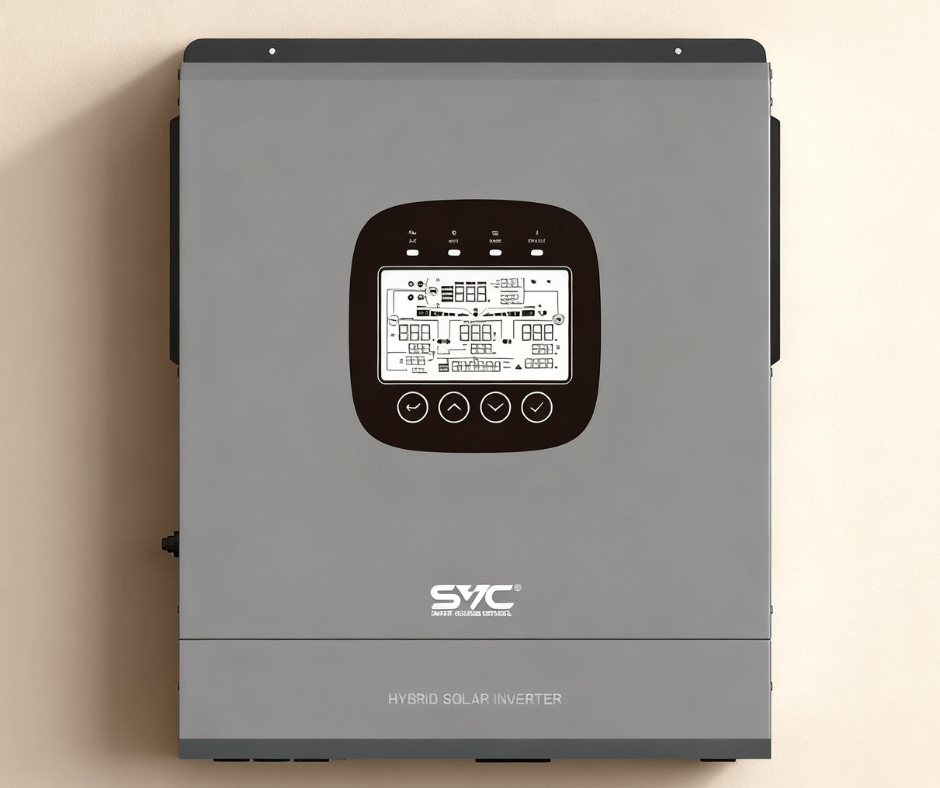
3. Hybrid / Energy Storage System (ESS) Inverters
Also known as grid-tied with battery backup, hybrid inverters combine the features of both grid-tied and off-grid types. They can export excess solar power to the grid like a grid-tied inverter and are also designed to integrate with a battery bank for backup power. Some are all-in-one units, while others consist of separate components (inverter, charge controller, etc.). A key advantage is that many hybrid inverters can operate without batteries initially, allowing for a simpler grid-tied setup with the option to add storage later. This is the preferred choice for homeowners seeking backup power, load shifting, self-consumption optimization, or time-of-use management.
4. Mobile (RV/Marine) Inverters
These perform the same core function but are designed for the unique demands of vehicles and boats. They are generally smaller in power rating, as energy needs are lower than in a residential setting. While they cannot sell power back to a grid, many can accept "shore power" (grid connection at a campsite or marina) to run loads and charge the vehicle's batteries. A key distinguishing feature is a built-in transfer switch and specific grounding configurations to safely switch between inverter power, shore power, and generator power.
What Should I Consider When Choosing a Grid-Tied Inverter?
String Inverters
The most common and economical choice. Solar panels are wired in series to form high-voltage DC strings, which feed into a central inverter. They are simple but can be susceptible to power loss if any panel in a string is shaded or underperforming.
Power Optimizer Systems
These combine a string inverter with DC optimizers installed on each panel. Optimizers perform module-level power point tracking, minimizing shading losses and enabling panel-level monitoring. They inherently satisfy module-level rapid shutdown requirements.
Microinverters
A small inverter is installed directly behind each solar panel, converting DC to AC right at the source. This maximizes each panel's independent production, simplifies system design and expansion, and provides inherent module-level monitoring and rapid shutdown. There is no high-voltage DC wiring on the roof.
How Do I Choose an Off-Grid or Hybrid Inverter?
For systems independent of or capable of islanding from the grid, key considerations shift:
Pure Sine Wave
Produces a smooth, grid-quality AC waveform. Essential for sensitive electronics, variable-speed motors, appliances with digital controls, and medical equipment. It is the standard for all residential and hybrid systems.
Modified Sine Wave
Produces a stepped waveform that is less efficient and can cause humming, overheating, or damage to sensitive devices. Generally only used for basic, non-critical applications due to lower cost.
Continuous & Surge Power Rating
The inverter must handle the total running wattage of all simultaneous loads and the short-duration surge (starting) power required by motor-driven appliances like refrigerators, pumps, or power tools.
Input Voltage
Must match your battery bank voltage (common: 12V, 24V, 48V). Higher voltage systems (48V) are standard for whole-home setups due to lower current and increased efficiency.
Output Voltage
For North American homes, you typically need 120V for standard outlets and 240V for large appliances (dryers, stoves, well pumps). Choose a split-phase inverter (outputs 120V/240V) or stackable inverters to achieve this.
Inverter/Charger Functionality
Most modern off-grid and hybrid inverters are inverter/chargers. They include a built-in AC transfer switch and a battery charger. This allows them to:
- Automatically switch loads to an AC source (grid or generator) when available.
- Use that AC source to charge the batteries.
- Some support "power assist" or "passthrough" modes, blending battery power with a limited AC source (like a small generator) to run larger loads.
System Integration & Features
Consider communication capabilities (for monitoring and control), compatibility with specific battery chemistries (Lithium vs. Lead-Acid), and whether you need an all-in-one unit or a component-based system.
Unveiled the Magic of Hybrid Inverter: Comprehensive Guidance
If you are looking for the products for your business please
contact us

+86 75782782286


Headquaters: Block7, No.115, ZhangChayi Road, Foshan, Guangdong, China