
Modified Sine Wave vs Pure Sine Wave: A Quick Comparison
When evaluating inverters and UPS systems, the output waveform is one of the most critical specifications — yet it's often overlooked. The waveform determines what equipment can be safely powered, how efficiently it runs, and how long it lasts. Choosing the wrong type can lead to erratic behavior, overheating, and premature failure of connected devices.
Understanding the real-world differences between pure sine wave and modified sine wave is essential for making informed decisions and ensuring reliable performance across a range of applications.
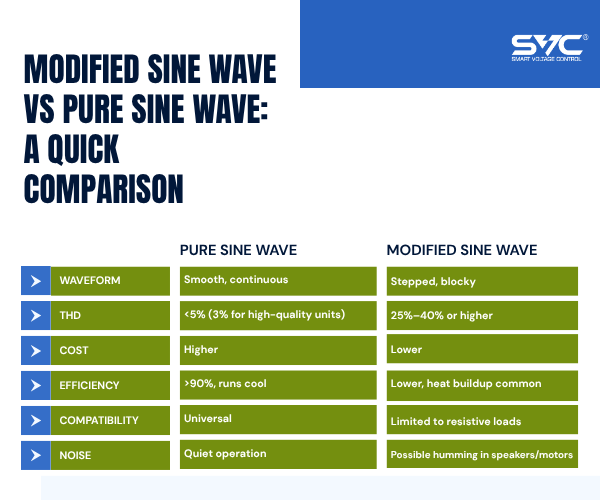
Here is a quick comparison to show the scope of the differences:
Waveform Characteristics
- Pure Sine Wave UPS delivers a smooth, continuous waveform identical to utility grid power.
- Modified Sine Wave UPS produces a stepped, blocky waveform that approximates a sine wave. Higher harmonic content, which can affect how connected equipment behaves.
Total Harmonic Distortion (THD)
- Pure Sine Wave UPS: Typical THD below 5%, with high-quality units achieving 3% or less. This level of distortion is imperceptible to most equipment and falls within acceptable limits for sensitive electronics.
- Modified Sine Wave UPS: THD typically ranges from 25% to 40% or higher. This elevated distortion level is the primary cause of erratic behavior, overheating, and audible noise in connected devices.
For applications involving medical equipment, audio/video systems, or devices with Active PFC power supplies, low THD is not just beneficial — it is often required.
Cost
- Pure Sine Wave UPS: Higher upfront cost, positioned as a premium solution. Suitable for applications where reliability and compatibility are non-negotiable.
- Modified Sine Wave UPS: Lower cost point, serving as an entry-level or budget-oriented option. Appeals to price-sensitive buyers with basic power needs.
Efficiency & Thermal Performance
- Pure Sine Wave: Typical efficiency >90%. Devices run cooler, reducing thermal stress and extending operational life.
- Modified Sine Wave: Lower efficiency, particularly under inductive loads. Motors, transformers, and power supplies may run hotter, potentially shortening equipment lifespan.
Load Compatibility
Pure Sine Wave: Universal compatibility. Supports all AC-powered loads, including:
- Electronics with Active PFC power supplies
- Inductive loads (motors, compressors, pumps)
- Medical devices
- Audio/video equipment
Modified Sine Wave: Best suited for simple resistive loads such as incandescent lighting and basic heating elements. May cause issues with:
- Sensitive electronics (erratic behavior, failure to start)
- Motor-driven appliances (increased current draw, overheating)
- Audio equipment (audible noise)
Noise & Interference
- Pure Sine Wave: Clean power delivery with minimal electrical noise. No audible interference in connected devices.
- Modified Sine Wave: Can introduce audible humming in speakers, motors, and transformers. Some LED lighting and power supplies may also exhibit operational noise or flicker.
Equipment Longevity & Reliability
- Pure Sine Wave: Provides stable voltage and current delivery, reducing wear on sensitive components. Generally recommended for mission-critical or long-lifecycle installations.
- Modified Sine Wave: Higher harmonic distortion can lead to erratic operation, thermal buildup, and, in some cases, premature failure of connected equipment — especially in devices with microprocessors or electronic controls.
Final Thoughts
For most applications involving modern electronics, motor-driven devices, or any equipment where reliability matters, pure sine wave is the appropriate choice. Modified sine wave remains a viable option only for simple, resistive loads where cost is the primary constraint and performance trade-offs are understood.
Selecting the right waveform upfront prevents compatibility issues, reduces support overhead, and ensures that the equipment being powered performs as intended over its full service life.
Transformer-based UPS vs Transformer-less UPS: Which One Do You Need
2026 Uninterruptible Power System (UPS) Market Outlook: Trends, Innovations & Strategic Opportunities for Global Buyers
If you are looking for the products for your business please
contact us

+86 75782782286


Headquaters: Block7, No.115, ZhangChayi Road, Foshan, Guangdong, China