
Not All UPS Are Built the Same: Rack, Tower, and Modular UPS Explained
When protecting critical equipment from power outages, surges, and fluctuations, one thing becomes clear quickly: not all UPS are built the same. Choosing the right uninterruptible power supply isn't just about backup power—it's about architecture, physical space, and long-term scalability.
Based on physical structure, UPS systems fall into three main types. Each offers distinct advantages and ideal use cases. Understanding these differences helps you select a solution that fits your environment today and grows with you tomorrow.
Rack-Mounted UPS: Compact Power for Data Centers
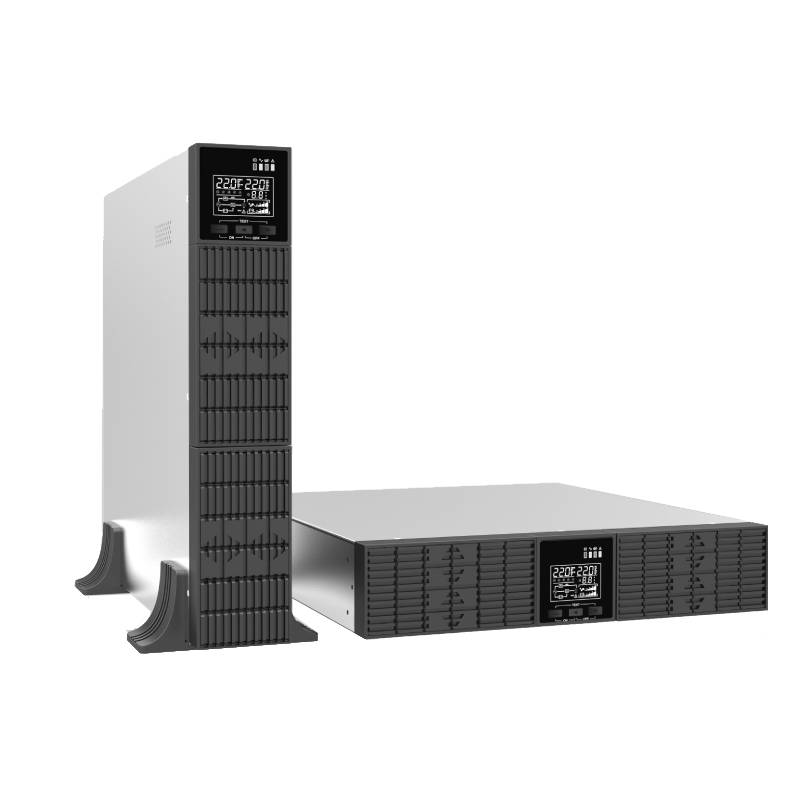
A rack-mounted UPS is specifically designed to fit inside standard equipment cabinets. It mounts neatly alongside servers, switches, and other network devices within the same rack.
This form factor is widely used in data center environments where space utilization and cable management are top priorities.
Key Benefits of Rack-Mounted UPS:
-
Installs directly into server racks, saving valuable floor space
-
Easy installation, maintenance, and centralized monitoring
-
Streamlined cable routing and airflow management
Ideal for server rooms, network closets, and enterprise data centers where every square foot matters.
Tower UPS: Standalone Reliability for High Efficiency
A tower UPS is a floor-standing unit placed independently. It requires dedicated installation and operating space but delivers exceptional performance and reliability.
Modern tower UPS models feature digital control + IGBT rectifier technology, achieving 95–96% efficiency even at low loads (20–40%). That means less energy waste and lower cooling costs.
Key Benefits of Tower UPS:
-
Simple standalone floor installation
-
High efficiency across varying load levels
-
Proven reliability with advanced digital controls
Ideal for: data centers, control & dispatch centers, industrial environments, and facilities that prefer traditional floor-mounted equipment.
Modular UPS: Scalable Power for High Availability
A modular UPS takes a different approach. It consists of a rack frame, hot-swappable power modules, a static switch module, a display and communication module, and battery packs—all working together as a unified system.
The modular architecture eliminates single points of failure and allows you to scale capacity without system shutdown.
Key Benefits of Modular UPS:
-
Hot-swappable power modules + redundant architecture
-
No single point of failure
-
Supports N+1, N+X redundancy configurations
-
Easily scale up or down without interrupting operations
Best for: high-availability environments needing flexibility, such as colocation data centers, hospitals, financial institutions, and growing IT facilities.
How to Choose Between Rack, Tower, and Modular UPS
| Feature | Rack-Mounted | Tower | Modular |
|---|---|---|---|
| Space | Minimal (in-rack) | Requires floor space | Rack frame + floor space |
| Scalability | Fixed capacity | Fixed capacity | Hot-swappable scale |
| Redundancy | External only | External only | Built-in N+1/N+X |
| Typical Efficiency | Variable | 95–96% | High with load optimization |
| Best For | Server rooms, networks | Data centers, control centers | Growing, critical environments |


Why the Right UPS Architecture Matters
Choosing the right AC UPS isn't just about power ratings—it's about matching the physical structure to your operational reality. A rack-mounted UPS keeps floor space free. A tower UPS delivers high efficiency at partial loads. A modular UPS offers fault tolerance and growth without downtime.
Over 23 Years of UPS Expertise
With over 23 years of experience, we are a dedicated UPS manufacturer providing full-range uninterruptible power solutions. From rack-mounted and tower to modular UPS, we help you find the right fit—not just a product, but a long-term power protection strategy.
Contact us today to discuss your specific application. Whether you need compact rack power, high-efficiency tower backup, or fully redundant modular architecture, we have the solution.
5 Essential Tips for Choosing the Right Power Backup
Transformer-based UPS vs Transformer-less UPS: Which One Do You Need
If you are looking for the products for your business please
contact us

+86 75782782286


Headquaters: Block7, No.115, ZhangChayi Road, Foshan, Guangdong, China